Drops, oils and what to avoid
Removing ear wax at home: what's safe
For most people, a few days of olive oil or pharmacy drops is all a build-up needs. The rest of looking after your ears at home is mainly about what to leave out: cotton buds, pointed objects and ear candles tend to make things worse.

At a glance
- How long it takes
- 3 to 5 days of drops; the wax can take up to 2 weeks to clear
- What it feels like
- Painless, though hearing may dip for a day or two as the wax softens
- Drops beforehand
- Drops are the treatment
- Water used
- No
- Who does it
- You, at home
- NHS and NICE position
- The NHS suggests oil drops as the first thing to try
In short
- Ear wax usually clears by itself. Only a build-up that causes symptoms, such as muffled hearing or a blocked feeling, needs treating.
- The NHS suggests 2 to 3 drops of olive or almond oil, 3 to 4 times a day for 3 to 5 days. Lumps of wax should come out over about 2 weeks.
- Pharmacy drops, such as sodium bicarbonate or urea hydrogen peroxide, are alternatives. Follow the leaflet and don't use them for longer than it says.
- Keep cotton buds, fingers, hairgrips, ear picks and ear candles out of your ears.
- Don't use drops or water if your eardrum might be perforated. If drops haven't helped after 5 days, see a nurse, pharmacist or ear care clinician.
Most ear wax problems can be handled at home. The ear is built to clean itself, and when a build-up does cause trouble, a few days of oil drops is often all it needs. The harder part is leaving everything else alone: the cotton bud, the hairgrip, the ear candle and the camera scoop that promises to show you exactly what you are removing.
Does your ear wax need removing at all?
Probably not, unless it is causing symptoms. Wax protects the ear canal, and the skin lining it slowly moves outwards, carrying old wax to the entrance, where it dries and falls away. For most people the only cleaning an ear needs is a wipe round the outer ear with a flannel.
A build-up is worth treating if it is causing:
- Muffled hearing
- Earache or a blocked feeling
- Ringing or buzzing (tinnitus)
- Dizziness (vertigo)
These can have other causes, such as an infection or fluid behind the eardrum after a cold. If your ear is painful, discharging or swollen, or you have a high temperature, don't treat it as wax: see a pharmacist or GP. Our guides to the signs of ear wax build-up and telling wax from an ear infection can help you decide.
Softening drops: the first thing to try
Drops soften the wax so it can work its way out on its own. The NHS suggests olive or almond oil, and a pharmacist can sell you alternatives.
What the NHS suggests
- 2 to 3 drops of olive or almond oil in the blocked ear
- 3 to 4 times a day, for 3 to 5 days
- lying on your side, blocked ear facing up, for 5 to 10 minutes after each dose
Buy oil made for use in the ear from a pharmacy rather than using oil from the kitchen. Warm the bottle in your hand first, because cold drops can make you dizzy, and gently pull the top of your ear up and back as they go in. A last dose at bedtime gives the oil the night to work.
Over about 2 weeks, lumps of softened wax should come out by themselves, often onto the pillow. Your ear may feel more blocked for a day or two first, as the wax swells. That is common and usually passes. Our guides on how to use ear drops and olive oil for ear wax cover the technique and what to expect.
Drops from a pharmacy
Sodium bicarbonate drops and drops containing urea hydrogen peroxide are the usual alternatives to oil. Peroxide drops fizz and crackle as they work, which is normal. Use them for the number of days the leaflet gives and no longer, as some people find they irritate the skin of the canal. Research hasn't shown any one type to be clearly better, so pick the one you find easiest to use.
Don't use drops if your eardrum might be perforated
Don't put oil, drops or water in your ear if you have, or might have, a hole in your eardrum, if you have grommets, or if the ear is painful or discharging. Avoid almond oil if you are allergic to almonds.
Everyday habits that help
- Let the shower do the cleaning. Warm water running over the outer ear is plenty. Tilt your head to let it drain and dry the outer ear with a towel, but don't point the shower head into your ear.
- Keep hearing aids and earbuds clean. Both stop wax leaving the ear and can push it back in. See ear wax and hearing aids and earphones and ear wax.
- Let water out after swimming. Tip your head to each side to let it drain. Our guide to swimming, showering and ear wax has more.
- Ask about prevention if build-ups keep coming back. A pharmacist can tell you whether occasional drops would suit you.
Bulb syringes: only if you have been advised to
Some pharmacy kits pair softening drops with a small rubber bulb syringe. After a few days of drops, you gently squeeze a little water at body temperature into the ear to rinse the softened wax out. It is far gentler than the old metal syringes, but you can't see what you are doing, and water in the wrong ear can do real harm.
Only use one if a pharmacist, nurse or ear care clinician has said it suits you, and never if you:
- have, or have ever had, a perforated eardrum
- have grommets, or have had surgery on your ear
- have ear pain, discharge or a possible infection
- aren't sure what state your eardrum is in
If you do use one, aim the water at the side of the canal rather than straight in, and stop at once if it hurts or you feel dizzy. Never use a dental water flosser or a shower jet in your ear.
What not to do
The safest rule is simple: don't put objects into the ear canal. NICE advises against removing wax or cleaning the ears with small objects such as cotton buds, because they can damage the canal and eardrum and push wax further in.
Do
- use olive or almond oil, or drops from a pharmacy
- let shower water rinse the outer ear, then dry it
- ask a pharmacist if you aren't sure it is wax
- stop and get advice if anything hurts
Don't
- use cotton buds, fingers, hairgrips or keys in the canal
- dig with ear picks, spiral tips or camera scoops
- use ear candles
- use household hydrogen peroxide or homemade mixtures
Cotton buds
A cotton bud catches a little wax on its tip and pushes the rest deeper, packing it towards the eardrum. It is one of the commonest reasons wax gets stuck in the first place. Read why cotton buds make ear wax worse.
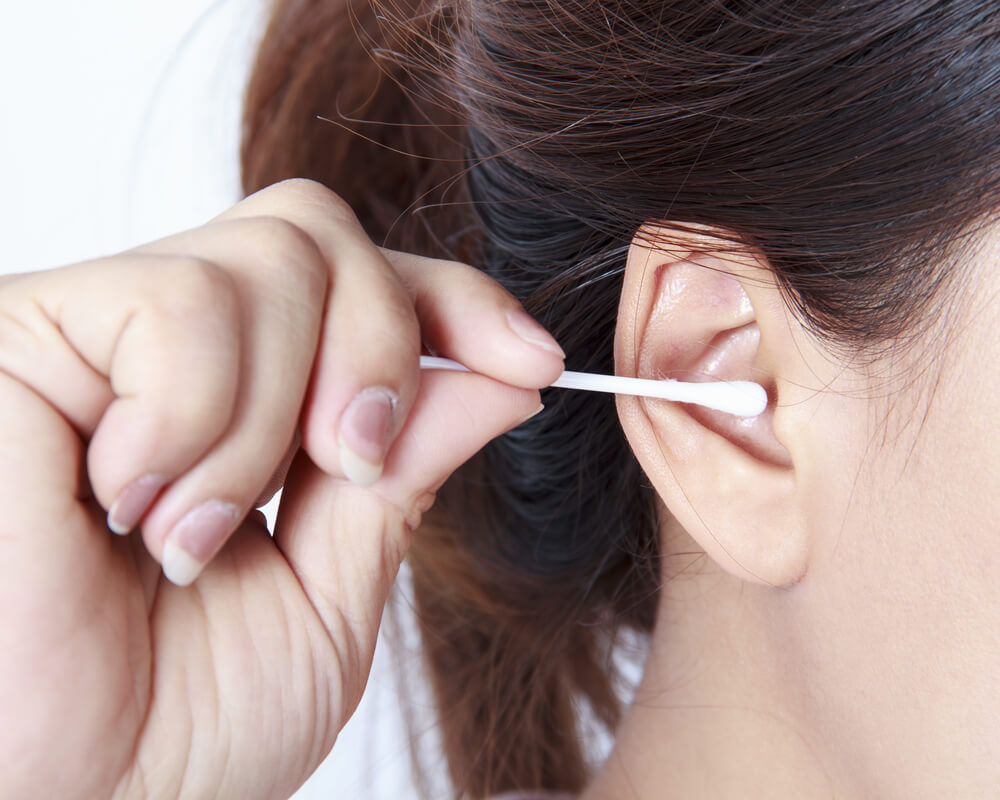
Hairgrips, keys and other pointed objects
The skin of the inner ear canal is thin and lies almost directly on bone. Anything sharp or hard can graze it, and a graze can bleed or become infected. A slip can reach the eardrum.
Ear picks and camera scoops
A clinician removing wax by hand can see what they are doing. You can't, even with a camera on the tool. Our pages on mimikaki and manual wax removal and home kits and ear cameras explain the difference.
Ear candles
The NHS says there is no evidence that ear candles get rid of ear wax, and they can burn your face or drip candle wax into your ear. See our page on Hopi ear candles for what the research found.
When to stop and get help
Give drops a fair chance, but don't keep going for weeks. The NHS advises seeing a nurse at your GP surgery if symptoms haven't cleared after 5 days, or if your ear is so blocked you can't hear anything. Many surgeries no longer remove wax, so you may be directed to a pharmacy, a community ear care service or a private clinic. Our guide to ear wax removal on the NHS explains what may be available where you live.
Get urgent advice from NHS 111 or your GP if you have
- sudden hearing loss in one or both ears
- severe pain, or pain that is getting worse
- discharge or bleeding from the ear
- a high temperature, or swelling and redness around the ear
- something stuck in your ear
- weakness in your face, or severe dizziness
What a clinician can do if drops don't work
A clinician can look in your ear, confirm the problem is wax and remove it in a single appointment, usually by microsuction, electronic ear irrigation or removal with fine instruments. The drops you have already used often make the job easier.
Private prices vary with the clinic and the area. As a rough guide, a clinic appointment for both ears typically costs between £45 and £100, and home visits cost more. See how much ear wax removal costs and what happens at an appointment.
Find a clinic
Still blocked after a week of drops?
Search by town or postcode to find ear wax removal clinics nearby, then book online or call the clinic direct.
Common questions
Can I use olive oil from the kitchen for ear wax?
It is better to buy olive oil made for use in the ear from a pharmacy. It is inexpensive, comes in a dropper bottle or spray that makes a small dose easy, and is packaged for the job. Our guide to olive oil for ear wax compares drops, sprays and kitchen oil.
How long do ear drops take to work?
Use them for 3 to 5 days, then give the wax time to come out. The NHS says lumps of wax should fall out over about 2 weeks, often at night while you are lying down. If your symptoms haven't cleared after 5 days of drops, the NHS advises seeing a nurse at your GP surgery.
Why does my ear feel more blocked after using drops?
Softened wax swells a little and can close the small gap that was letting sound through, so hearing often dips for a day or two before it improves. You may also hear popping or crackling as the wax shifts. If the ear becomes painful, or starts to discharge, stop the drops and get advice.
Is it safe to put hydrogen peroxide in your ear?
Only in drops made and licensed for ear wax, such as those containing urea hydrogen peroxide, used as the leaflet says. They fizz as they work, which is normal. Don't use hydrogen peroxide meant for cleaning wounds or surfaces, and don't make up your own mixtures.
Can I remove ear wax from my child's ears at home?
Don't put anything into a child's ear canal. Children rarely need wax removing, and a child with a sore or blocked ear is more likely to have an infection or fluid behind the eardrum. Ask a pharmacist or GP before using drops, and see our advice on ear wax in children.


